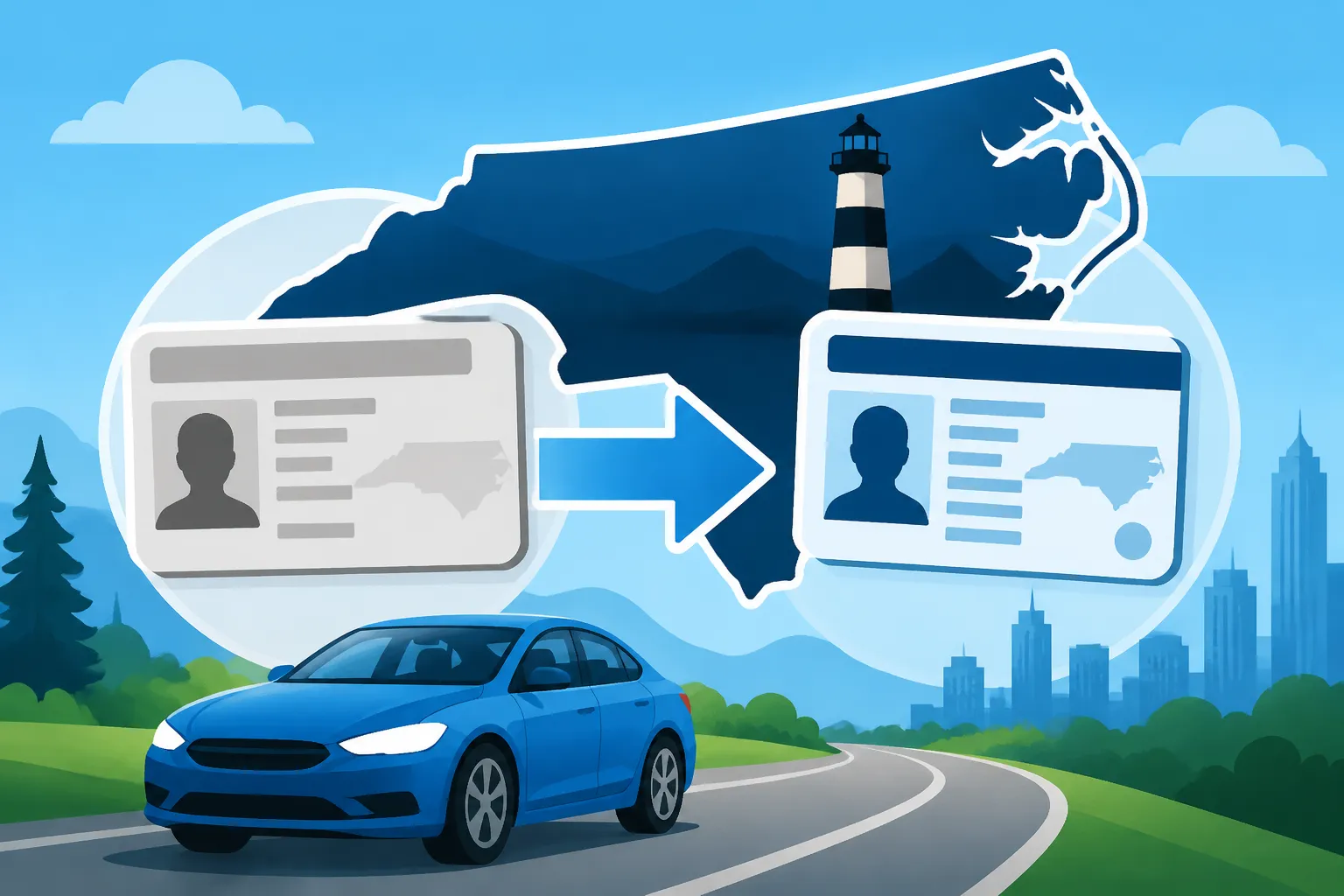
Transferring an Out-of-State Driver License to North Carolina
Moving to North Carolina means more than changing your mailing address: you may need to replace your out-of-state license with a North Carolina credential within a set period. The process is usually simpler when your current license is valid, but documents, testing, and teen-driver rules can change what you need to do. Here’s how to prepare and what to check with NCDMV.
When you need to transfer your license
If you establish residency in North Carolina and plan to drive, you generally must get a North Carolina driver license within 60 days. The deadline is tied to becoming a resident, not to when you happen to receive a reminder. Confirm how the rule applies to your circumstances with the North Carolina Division of Motor Vehicles, or NCDMV.
A license issued by another U.S. state is not a substitute for completing the transfer after you become a North Carolina resident. If you recently moved, start gathering documents and arranging an office visit rather than waiting until your current license is close to expiring. The time needed to find an appointment or assemble acceptable paperwork can vary.
A transfer is different from applying for a first license. If you hold a valid license from another state, NCDMV may be able to verify it and waive some testing. That does not mean every applicant is automatically exempt from every test. Your license status, driving history, age, credential type, and the documents you present can affect what the agency requires.
The 60-day transfer rule also does not automatically make every out-of-state driving privilege valid for every purpose. A suspended, revoked, expired, restricted, or provisional credential may need additional review. Do not assume you can drive just because a physical card is still in your wallet; check the credential’s current status and any restrictions.
The move may involve several separate tasks. Transferring your driver license does not register your car, transfer its title, or update your vehicle insurance. Those processes have their own requirements and deadlines. For the license process, start with Moving to North Carolina: In-Person License Transfer Rules. For a broader overview of timing and other new-resident tasks, see Moving to North Carolina: Your 60-Day Guide to Licensing and Vehicle Titling.
What to expect from the transfer process
A standard transfer usually involves an in-person visit to a North Carolina driver license office. NCDMV must verify your identity and eligibility, review your current license, and decide whether you need any testing. The agency may also take a new photograph and confirm information such as your residential address and Social Security number.
A useful way to plan is to separate the process into three questions:
- Can NCDMV verify your current driving privilege? Bring your current out-of-state license, if you have it, and be ready to explain if it is expired, damaged, lost, or subject to a restriction.
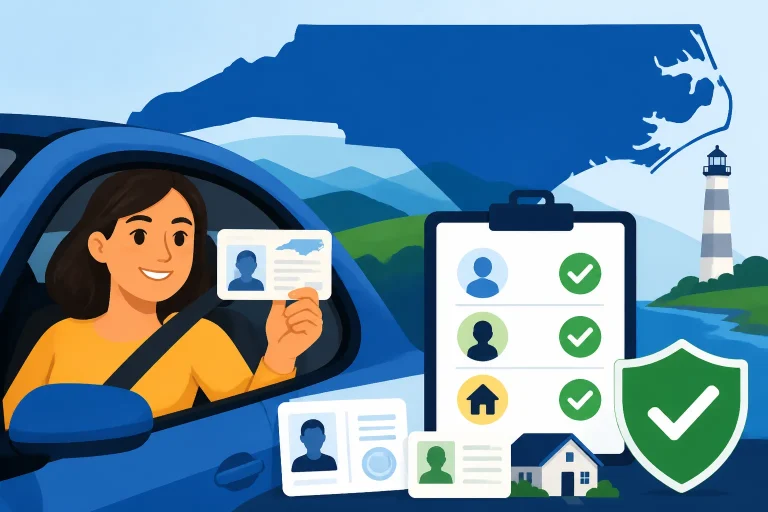
- Can you prove identity and North Carolina residency? Bring documents that meet the agency’s requirements, especially if you want a REAL ID.
- Will you need a test? A valid, verifiable license often simplifies testing, but NCDMV makes the decision based on your record and situation.
| Your situation | What it may mean for the transfer | What to do |
|---|---|---|
| Current, valid out-of-state license | NCDMV may be able to verify it and waive some tests | Bring the license and required identity and residency documents |
| Expired license | The agency may require additional testing or proof of eligibility | Ask NCDMV what tests apply before your visit |
| Lost or unavailable license | Verification may take more work, and additional records may be needed | Bring other identifying information and contact NCDMV for instructions |
| Suspended or revoked license | You may not be eligible for a routine transfer | Resolve or clarify the status before driving or applying |
| Teen or provisional license | North Carolina’s graduated licensing rules may affect the credential issued | Bring records showing the current license level and driving history |
| Commercial license | Commercial credentials have separate testing and documentation rules | Follow the CDL transfer process rather than the standard Class C process |
| Motorcycle endorsement | The endorsement may need separate verification or testing | Tell NCDMV you want the motorcycle privilege included |
If you already know that your move requires an office visit, plan for a driver license office, not a license plate agency. The two locations handle different services. Use NCDMV’s official office locator to find a driver license office and check its current hours. Appointment availability and walk-in procedures can change, so confirm the latest instructions before traveling. For help choosing a visit type, see How to Schedule an NCDMV Visit: Booking Rules and Deadlines.
NCDMV may issue a temporary driving certificate after completing an eligible transaction while your permanent card is produced and mailed. A temporary certificate is not necessarily accepted everywhere as a general photo ID. Keep your existing documents and follow any instructions given at the office. Do not treat a temporary credential as permission to drive if the agency has not confirmed that your driving privilege is valid.
Documents to gather before you go
Bring your current out-of-state license if it is available. Even if the license is expired or damaged, take it with you rather than leaving it behind; it can help identify your record. If you do not have the card, contact NCDMV before your visit to ask what information or alternative records may help staff verify your driving history.
You will also need documents that establish who you are and, depending on your application, your eligibility to receive a North Carolina credential. The acceptable documents depend on your situation. A REAL ID application has additional requirements, so decide before your visit whether you want to apply for a REAL ID-compliant card.
Identity and lawful status
NCDMV requires proof of identity and legal presence under its document rules. The acceptable evidence depends on your citizenship or immigration status. Documents often need to be original or certified records rather than photocopies, and information on them must match or be connected to your current legal name.
If you have changed your name, bring the documents that connect the name on your identity evidence to the name you use now. Depending on your history, that may mean a certified marriage record, court order, divorce decree, or a sequence of documents covering more than one name change. A mismatch does not necessarily make you ineligible, but arriving without the connecting records can delay the transaction.
For a REAL ID, document standards can be more demanding than for a standard credential. A REAL ID is optional for driving; it is a choice about the type of card you receive. Review REAL ID Checklist and Application Rules in North Carolina before deciding which credential to request. If you want a REAL ID as part of your move, check whether your identity, lawful-status, and name-change documents meet the current NCDMV checklist.
Social Security number and North Carolina address
Be prepared to provide your Social Security number in the format NCDMV requires. The agency may verify the number electronically or request acceptable documentation. If your name has changed, make sure the name used for your Social Security record and the name on your supporting documents are consistent. If they are not, ask what needs to be updated or brought before scheduling your visit.
You will also need to establish your North Carolina residential address. An address on a bill or other record may be useful only if it meets NCDMV’s current document rules. Check the official list rather than assuming that any mail with your name on it will qualify. Applicants seeking a REAL ID should be especially careful to bring the required address evidence.
The complete requirements depend on the card you are applying for and your personal circumstances. Use North Carolina Driver License Checklist: Identity, SSN, and Residency as a preparation aid, then confirm details with NCDMV. For a closer look at address evidence, see Moving to North Carolina: What Satisfies DMV Residency Verification?.
Documents that can prevent a second visit
Before leaving home, compare the name, date of birth, and address across your documents. Look for small differences such as a missing middle name, an old address, or a suffix appearing on only one record. A difference may be explainable, but it is easier to bring the supporting document than to discover at the counter that an extra record is needed.
Keep documents in their original or certified form when required. Do not assume a phone photo or a printed copy will be accepted. If a record is difficult to replace, verify the requirements with NCDMV before relying on it.
A practical folder can include:
- Your current or most recent out-of-state license.
- Identity and lawful-status documents required for your application.
- Proof of your Social Security number, if required.
- Documents showing your North Carolina residential address.
- Legal records connecting name changes.
- Any record relevant to a suspension, restriction, or special driving privilege.
- Extra records NCDMV has told you to bring.
This list is a planning tool, not a substitute for the agency’s current document checklist. Requirements can depend on whether you are applying for a standard credential or a REAL ID, and on the specific documents you have.
Testing, license status, and driving record
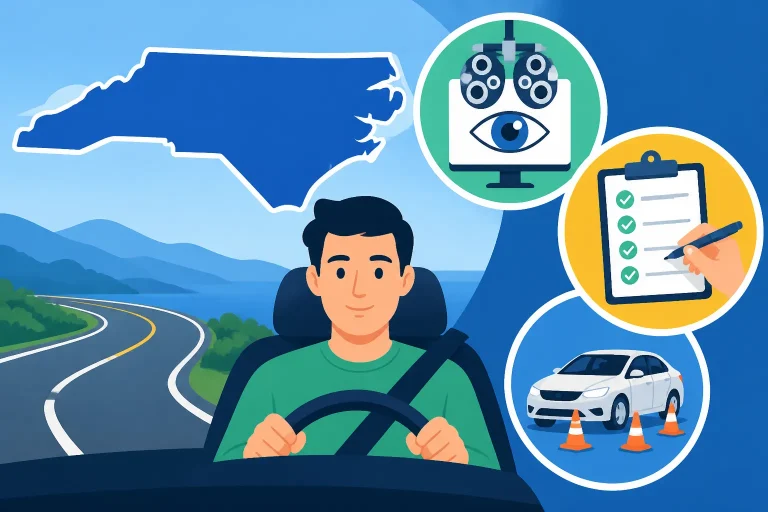
One of the most common questions is whether transferring a valid out-of-state license requires a written or road test. For a routine transfer, NCDMV may accept a valid license after verifying it and waive some tests. However, a waiver is not guaranteed simply because you have a card from another state. The agency determines what testing is required for your application.
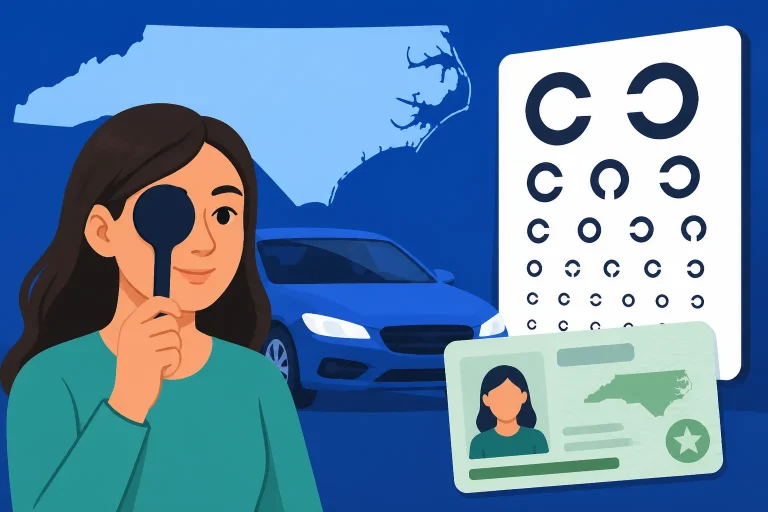
A vision screening may be part of the visit. If you need corrective lenses to drive, be prepared to use them during the screening and make sure you understand how any restriction will be recorded. For details about vision screening, see Vision Screenings Conducted at the NC DMV Front Counter.
NCDMV may require additional testing if your license is expired, cannot be verified, or does not show the driving privileges you are seeking. You may also be asked to take a knowledge test or road test if the agency has a reason to confirm your ability or eligibility. Do not schedule your move around an assumed exemption; ask what applies to your license before the visit.
If your license is expired, lost, or restricted
An expired license can complicate a transfer because the agency may not be able to process it as a straightforward exchange. The amount of time it has been expired, your prior licensing history, and the information NCDMV can verify may affect the next steps. Bring the expired card and any records you have, and ask whether testing or additional documents will be required.
If your license is lost, do not drive on the assumption that North Carolina can immediately issue a replacement. NCDMV may need to verify the prior credential and your identity. If you can obtain a driving record or replacement credential from the previous state, ask whether it would help and whether the record must meet any particular standard.
A restriction on your out-of-state license matters, too. Restrictions may involve corrective lenses, daylight-only driving, vehicle type, or another condition. Tell NCDMV about restrictions rather than expecting every detail to transfer automatically. The agency will determine what can be carried over and how it should appear on your North Carolina credential.
If your prior license was suspended or revoked, a transfer application is not a way to bypass that action. Get the status clarified before driving. A suspension can involve another state, North Carolina, or both. For North Carolina suspension questions, use Guide to License Suspensions and Restorations in North Carolina. If you are unsure whether a North Carolina block exists, Finding Out if Your North Carolina License Is Suspended explains how to check.
If you have a commercial or motorcycle credential
A commercial driver license is not the same as a standard Class C transfer. Commercial drivers may need to meet federal and state requirements, verify their commercial history, and complete applicable testing or endorsement steps. If you hold a CDL, use How to Get a Commercial Driver License in North Carolina and confirm the appropriate transfer process with NCDMV before booking a standard license appointment.
Do not assume that every commercial endorsement will transfer without review. Passenger, school bus, hazardous materials, and other endorsements may have additional qualifications or checks. Bring your current commercial credential and any documents relevant to your endorsements.
A motorcycle endorsement also deserves a specific check. Tell the examiner or intake staff that you want the motorcycle privilege included in the North Carolina credential, and ask whether your out-of-state endorsement can be verified or whether testing is required. If you leave the endorsement off, correcting the omission later may require another transaction or additional testing.
Teen drivers and other special situations
A transfer can be less routine for a teen than for an adult with a full, unrestricted license. North Carolina uses a graduated licensing system for young drivers. The level of license you receive can depend on your age, the stage of your out-of-state license, how long you have held it, and whether you can document your driving experience.
Do not assume that an out-of-state learner permit or provisional license converts directly into an unrestricted North Carolina license. North Carolina may place you at the stage that fits its requirements, and the privileges may differ from those allowed in your former state. That can affect supervision, passenger limits, nighttime driving, and how long you must hold a permit or provisional credential.
Bring the teen’s current credential and any records that establish when it was issued, the level of privilege, and completed supervised driving or driver education if relevant. Ask NCDMV which records it needs to evaluate prior experience. A school or course certificate may be useful in some cases, but do not assume it replaces a required state record or test.
The details depend on age and licensing history. Review Graduated Licensing and Teen Driving Permits in North Carolina and Moving to NC With a Teen License: Graduated Licensing Steps. If a teen has a learner permit rather than a full license, ask NCDMV whether the credential can transfer and what restrictions will apply before allowing the teen to drive in North Carolina.
Students, military members, and temporary stays
Some people live in North Carolina temporarily for school, work, or military service while keeping ties to another state. Whether you must transfer a license can depend on residency and the details of your situation. Do not rely on a general rule of thumb based only on the length of a school term or a temporary assignment. Ask NCDMV how the residency rules apply to you.
A temporary stay does not necessarily mean you can ignore other licensing conditions. Your home-state license must remain valid, and its restrictions still matter. If you establish North Carolina residency, the transfer deadline may apply even if you expect to move again soon.
International visitors and people with licenses from outside the United States should not treat a standard state-to-state transfer process as automatically applicable. Recognition of a foreign license or an international driving permit involves different questions. Contact NCDMV for instructions specific to your status and documents.
Your office visit and after the transfer
Before going, check the official NCDMV instructions for the service you need, appointment availability, document requirements, and current office procedures. Use the official office locator to find a driver license office and verify current hours. Do not rely on an old appointment confirmation or an unofficial list of required documents if the agency’s instructions have changed.
At the office, be ready to explain that you are transferring an out-of-state driver license. Present the documents requested, answer questions about your current license and driving history, and follow the examiner’s instructions for any screening or test. If you are applying for a REAL ID, say so clearly and provide the additional documents required for that credential.
NCDMV will review the application and determine whether the transfer can be completed that day. If a required record cannot be verified, ask what evidence is missing and how to resolve it. Before leaving, confirm any restrictions, endorsements, temporary credential instructions, and mailing information.
After the transaction, keep any temporary certificate or receipt in a safe place. Follow the instructions about when and where it is valid. The permanent card is generally mailed, so make sure the agency has the correct mailing address and understand how to proceed if it does not arrive as expected. A temporary paper credential may have limited uses; do not assume it can replace a photo ID in situations unrelated to driving.
Your new driver license does not automatically update every other record. Change your address with relevant providers, review your auto insurance, and handle vehicle registration and title requirements separately. If you need to update the address shown on your credential after the transfer, check Updating Your North Carolina Address Online via MyDMV for the applicable process.
Frequently Asked Questions
Do I have to transfer my out-of-state license within 60 days?
North Carolina generally requires new residents who drive to obtain a North Carolina license within 60 days of establishing residency. Confirm how residency and the deadline apply to your circumstances with NCDMV.
Will I have to take a road test?
A valid, verifiable out-of-state license may allow NCDMV to waive some testing. The agency decides based on your record and application, so confirm before assuming a road test is not required.
Can I keep my old state license after I transfer?
NCDMV follows a one-credential policy for state driver licenses and identification cards. Expect to surrender your out-of-state credential as part of the transfer. State-to-state verification may also affect the status of the prior credential. See State-to-State Verification and North Carolina Credentials.
Can I transfer an expired license?
You can ask NCDMV to review your situation, but an expired license may not qualify for the same process as a current one. Testing or additional records may be required. Bring the expired card and confirm what else to provide before your visit.
Is a REAL ID required to drive in North Carolina?
No. A REAL ID is an optional type of credential, not a separate permission to drive. If you want one, bring the additional documents NCDMV requires and review the REAL ID checklist before your visit.
Disclaimer
This article is for general informational purposes only and does not constitute professional advice. Laws, prices and regulations vary by location and change over time. Consult a qualified professional for guidance on your specific situation. North Carolina Driver Guide is not a government agency and is not affiliated with any state motor vehicle department.