NC License Renewal Vision Test Requirements
A North Carolina license renewal can involve more than confirming your name and address: the NCDMV may screen your vision before renewing your driving privilege. Knowing what the screening checks, how corrective lenses affect it, and what to do if you do not pass can help you prepare and avoid surprises at the office.
What the North Carolina vision screening checks
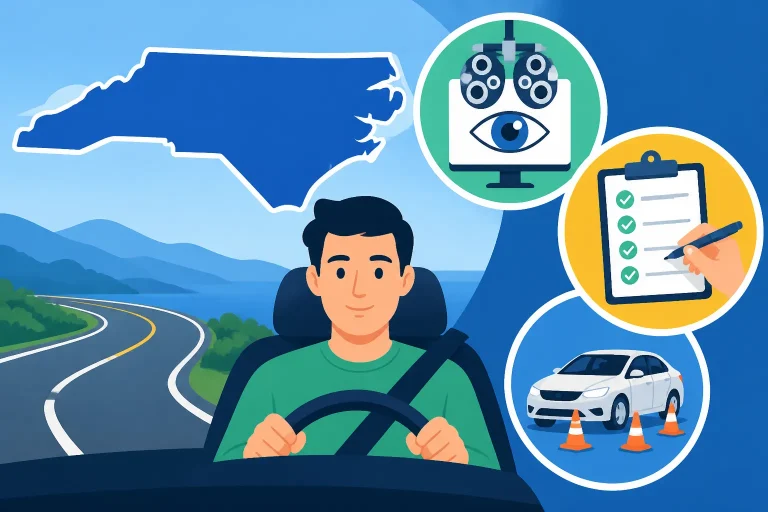
A vision screening at renewal is a basic check of whether you can see well enough to drive safely under the conditions allowed by your license. It is not a complete eye examination, and it does not replace care from an optometrist or ophthalmologist. The screening helps the NCDMV determine whether your vision appears to meet the requirements for driving or whether more information is needed.
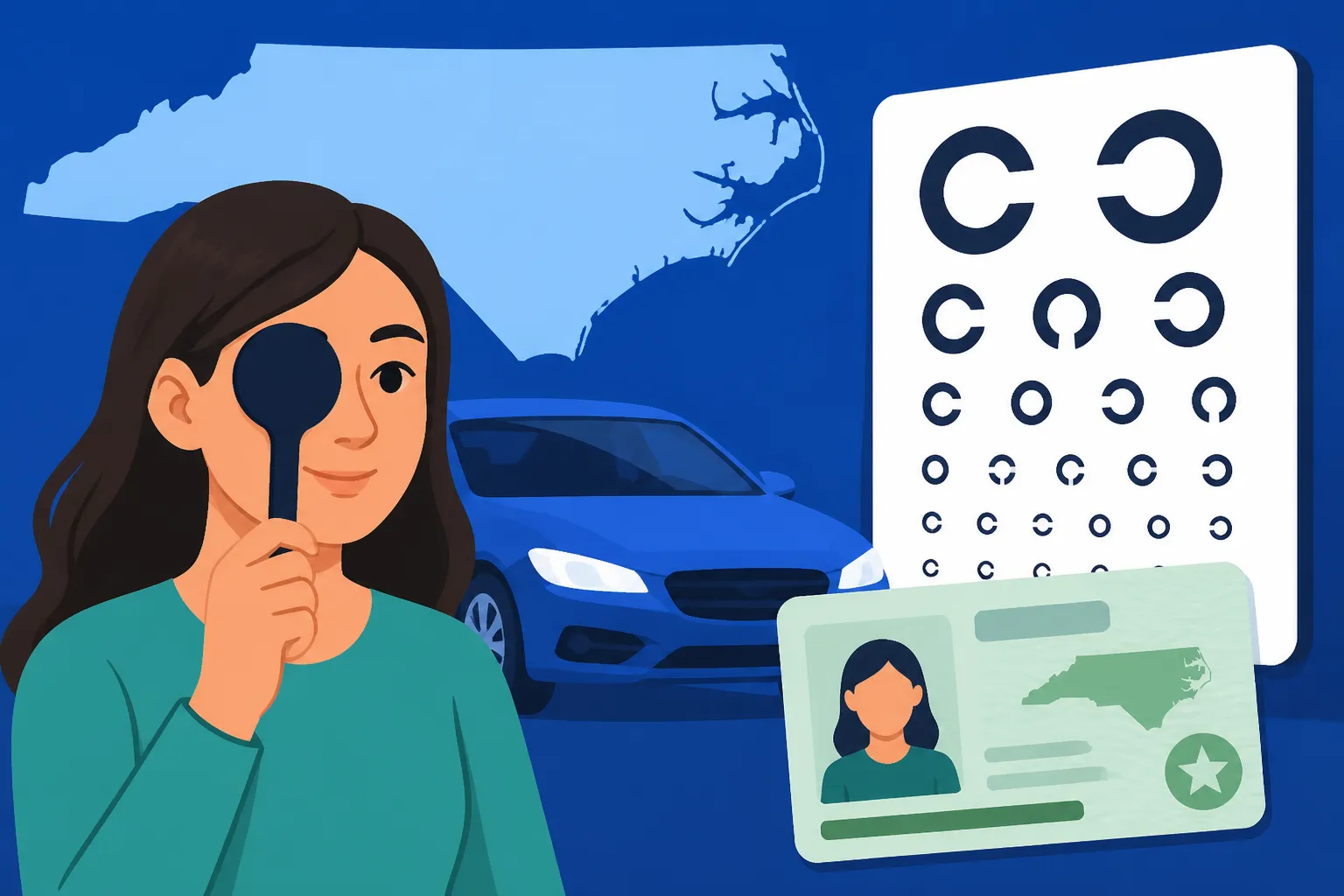
The screening may assess visual sharpness, sometimes called acuity, and whether you can see clearly enough with one or both eyes. Depending on your situation, the examiner may ask you to use corrective lenses during the check. The result may affect whether your renewed license includes a restriction requiring glasses or contact lenses.
A screening is only one part of a renewal visit. You may also need to confirm personal information, complete other required steps, or meet eligibility rules that apply to your record. Requirements can differ based on your credential, renewal history, and circumstances. For a broader overview of the renewal process, see Guide to Driver License Renewals in North Carolina.
The screening is meant to evaluate vision for driving, not to diagnose a medical condition. Passing it does not mean your eyes are free of disease, and not passing does not by itself explain why your vision was unclear. If you have noticed a change in your eyesight, make an appointment with an eye-care professional rather than relying on the license screening to identify the cause.
Why a screening can matter at renewal
Clear vision helps drivers recognize signs, pedestrians, lane markings, traffic signals, and hazards in time to respond. A driver may feel comfortable with familiar routes while still having trouble seeing distant signs or noticing objects at the edge of the road. A renewal screening provides a basic check, but it cannot reproduce every condition you encounter behind the wheel, such as glare, darkness, rain, or fast-changing traffic.
If you use glasses or contacts, bring them even if you do not wear them all the time. If the screening is done with your usual correction, the result may help determine whether a corrective-lenses restriction should appear on your renewed credential. Check your current license for any restrictions and tell the examiner if your vision needs have changed.
The vision screening can also affect how you plan your renewal. If you expect to need an in-person visit, allow time to arrange it rather than assuming an online transaction will be available. The eligibility rules for online renewal depend on the information in your record and the transaction. When Online Renewal Limits Force an In-Person NCDMV Office Visit explains why some renewals cannot be completed online.
A screening is not a substitute for medical advice
Do not wait for renewal if you are experiencing sudden vision loss, new flashes or floaters, severe eye pain, or another urgent change. Contact an appropriate medical professional promptly. For less urgent changes, arrange an eye examination before your renewal if possible. A current prescription may make the screening easier, but only a qualified eye-care professional can evaluate your eyesight and recommend treatment.
Corrective lenses, license restrictions, and the screening
If you need glasses or contact lenses to see clearly while driving, use them during the screening and whenever you drive as required by your license. A corrective-lenses restriction is a driving condition, not a penalty. It communicates that you must use the specified correction to meet the visual standard for driving.
An examiner may ask whether you wear corrective lenses or may have you complete the screening with them. Do not remove your glasses or contacts just to see whether you can pass without them. The useful result is whether you can meet the requirement under the conditions in which you actually drive.
If your current license already lists a corrective-lenses restriction, check whether your vision correction is current and bring the same kind of correction you use on the road. If your eyesight has improved after treatment, do not assume the restriction will disappear automatically. Ask the NCDMV what evaluation or documentation is needed to update a restriction. The NCDMV makes the licensing decision; an eye-care professional can provide clinical information but does not issue or amend a driver license.
A restriction may also affect the renewal method available to you. Online renewal eligibility is determined by the NCDMV and may depend on record-specific rules. Corrective lenses alone do not necessarily tell you whether you qualify to renew online. Review Online Renewal Restrictions for Corrective Lenses and Code 24 in NC if you are unsure whether your restriction affects an online transaction.
| Your situation | Practical step |
|---|---|
| You wear glasses or contacts for driving | Bring and use your current correction during the screening. |
| Your license lists a corrective-lenses restriction | Continue following it unless the NCDMV changes the restriction. |
| Your prescription has changed | Arrange an eye examination and use the correction that gives you clear vision. |
| You have had eye surgery or another treatment | Ask the NCDMV whether it needs an updated screening or documentation before changing a restriction. |
| You are unsure whether you can renew online | Check your NCDMV renewal eligibility rather than relying on the restriction alone. |
Glasses and contacts to bring
Bring the glasses or contact lenses you normally rely on for driving, along with a backup pair if you have one. If you wear contacts, consider bringing glasses in case your eyes become dry or irritated. Bring any current license or renewal information needed for your transaction, and check the official NCDMV instructions for the documents required in your situation.
A recent prescription or eye-care record may be useful if the NCDMV asks for supporting information, but do not assume that a prescription alone will replace an agency screening. If you have been told to provide a specific form or report, confirm what the NCDMV will accept before your visit. General document planning is covered in What to Bring to Your North Carolina DMV License Appointment.
If your vision changes between renewals
Your obligation to follow license restrictions does not stop after renewal. If your vision worsens, your correction no longer works well, or you develop a condition that could interfere with safe driving, talk with an eye-care professional. Until you know whether your vision is adequate, avoid driving in situations that feel unsafe and follow any medical advice or license restrictions that apply.
If a clinician recommends that you stop driving or limit certain driving, take that advice seriously. The NCDMV may also request information or review a driver’s ability to drive safely. A renewal screening is not permission to ignore changes that occur later.
If you do not pass the vision screening
Not passing a screening does not automatically tell you what caused the result or what the final licensing decision will be. The examiner may need more information, may ask you to try again with corrective lenses, or may direct you to provide an evaluation from an eye-care professional. The next step depends on the reason for the result and the instructions the NCDMV gives you.
Before leaving an office visit, make sure you understand what is required next. Ask whether you need an eye examination, a particular form, or a follow-up visit, and whether you may drive while the issue is unresolved. Do not assume that a temporary paper credential or a renewal receipt overrides a restriction or a decision about your driving privileges. If you are given written instructions, keep them with your renewal documents.
Get an eye examination if requested
If the NCDMV asks for an eye-care evaluation, contact a qualified professional and explain that the assessment is for a driver license renewal. Ask what information the NCDMV needs and whether the office provided a form. The eye-care professional can report clinical findings or recommendations, but the NCDMV determines whether those findings meet its licensing requirements.
An eye examination may identify issues that a brief screening cannot, such as a need for a stronger prescription or a medical condition affecting vision. Follow the clinician’s recommendations, including any limits on driving. If the examination results in a new prescription, use it consistently when driving and at any later screening.
If the examiner or NCDMV refers your case for review, follow the instructions and deadlines provided directly by the agency. Do not rely on a general estimate from someone else’s renewal experience; the necessary steps can depend on the details of your record and the type of concern raised.
Ask what happens to your renewal
A screening concern can mean your renewal is delayed while the NCDMV gathers or reviews additional information. It may also result in a restriction or another licensing decision. The exact outcome depends on the findings and applicable requirements, so avoid assuming that every person who has difficulty with the first screening receives the same result.
Ask the NCDMV what you may do while the issue is being reviewed. In particular, clarify whether your existing license remains valid, whether a temporary credential applies, and what documentation is needed before you drive. If you have questions about a restriction already printed on your license, Corrective Lenses Restrictions on North Carolina Licenses offers related information.
If your license expires while you are waiting, do not assume that an unfinished renewal allows you to drive. Confirm your current driving status with the NCDMV. For information about the paper credential issued in some situations, see Temporary Driving Certificates: Usage Rules Across North Carolina. A temporary certificate has defined limits and should not be treated as a general substitute for confirming your license status.
Preparing for an in-person renewal
Preparation can make the visit more straightforward, especially if you know you will need a vision screening. Start by checking your renewal eligibility and the transaction instructions from the NCDMV. If the official system indicates that you must appear in person, use the agency’s appointment information or office locator to plan the visit and confirm current requirements.
Before you go:
- Check the expiration date on your current license and the renewal instructions that apply to your record.
- Confirm whether your renewal can be completed online or requires an office visit.
- Bring your current glasses or contacts, and use them as you normally would for driving.
- Gather the identification or other documents the NCDMV asks you to bring.
- Review any restrictions printed on your license and be ready to explain if your vision needs have changed.
- If the NCDMV has requested an eye-care report or form, confirm the specific document and how it must be provided.
- Find the nearest driver license office and its current hours through the official NCDMV office locator.
For document-specific preparation, North Carolina Driver License Checklist: Identity, SSN, and Residency can help you review common credential requirements. If you are renewing in person and considering a REAL ID at the same time, check REAL ID Checklist and Application Rules in North Carolina before your visit. A REAL ID request may involve additional documentation, separate from the vision screening.
During the screening
Follow the examiner’s directions and tell them if you need to use your corrective lenses. If a test symbol, letter, or other visual target is unclear, say so rather than guessing. Guessing may produce a confusing result, while an honest response helps the examiner determine whether another step is needed.
If you have trouble seeing the screening material, let the examiner know whether your glasses are clean and current and whether you are having an unusual issue, such as dry eyes or irritation. Do not assume that the examiner can diagnose the reason. They can explain the next licensing step, while an eye-care professional can assess your vision.
If you have hearing, language, or other access needs that could affect communication during your visit, contact the NCDMV through its official channels in advance to ask about available assistance. Do not wait until the screening is underway to raise a communication barrier if it can be addressed before the appointment.
After the visit
Keep any instructions, forms, or temporary documents provided by the NCDMV. If you need an eye examination, schedule it and ask the clinic when the completed information will be available. Check that any paperwork identifies you correctly and answers the questions the agency requested. If anything is unclear, ask the NCDMV how to submit it and whether you need a new appointment.
A renewal visit may include a photograph, identity checks, or other steps that are unrelated to vision. Do not assume that passing the vision portion completes the renewal. Wait for the NCDMV to confirm that the transaction is finished and follow any directions about receiving or using the renewed credential. For an overview of the office process, see What to Expect at an NC License Renewal Visit.
Online renewal and when an office visit may be needed
Some drivers may be eligible to renew online, while others must renew in person. Eligibility depends on NCDMV rules and the driver’s record. A vision-related restriction, a required screening, a recent renewal history, or another record issue may affect the options available, but no single factor should be treated as a guarantee of eligibility or ineligibility.
The online system is the best place to confirm whether your particular transaction is available. If the NCDMV directs you to an office, plan for an in-person screening and follow its appointment or walk-in instructions. Do not start a renewal through a third-party service or assume that an online payment alone completes the official transaction.
If you are eligible to renew online, the agency may still require you to meet vision standards and follow any restrictions on your license. Online processing does not remove your responsibility to drive only when you can see safely. If your vision has changed, arrange an eye examination even if the system lets you complete a renewal online.
Renewal timing can also matter. Do not wait until the last moment if you expect to need an eye examination or an in-person visit. Check the expiration date and the NCDMV’s instructions, then leave time to resolve questions about documents, restrictions, or testing. How Early Can You Renew Your North Carolina Driver License? explains timing considerations, while NC License Renewal Vision Test Requirements is the topic of this article and should not be linked internally.
If you are approaching renewal and have not had an eye examination recently, consider arranging one before you begin the transaction. That does not guarantee a particular screening result or licensing decision, but it can help you understand whether your prescription is current and whether you should discuss driving with a clinician.
Frequently Asked Questions
Does every driver have to take a vision test when renewing in North Carolina?
The NCDMV may require a vision screening as part of renewal, especially during an in-person transaction. The requirements and process depend on the renewal and the driver’s record. Check the NCDMV’s instructions for your specific transaction.
Should I bring my glasses if I only wear them sometimes?
Yes. Bring the glasses or contacts you use for driving and follow the examiner’s directions. If you need correction to see clearly on the road, use it during the screening and while driving as required by your license.
What happens if I do not pass the screening?
The NCDMV may ask for another screening, an eye-care evaluation, supporting information, or another licensing step. Ask the examiner what is required and whether you may drive while the issue is unresolved.
Can an eye doctor remove a corrective-lenses restriction?
An eye-care professional can assess your vision and provide clinical information, but the NCDMV controls driver license restrictions. Ask the agency what it requires to review or change a restriction.
Can I renew online if I have a corrective-lenses restriction?
Possibly, but the restriction alone does not determine eligibility. Check the official NCDMV renewal system and follow any direction to complete the transaction in person.
Disclaimer
This article is for general informational purposes only and does not constitute professional advice. Laws, prices and regulations vary by location and change over time. Consult a qualified professional for guidance on your specific situation. North Carolina Driver Guide is not a government agency and is not affiliated with any state motor vehicle department.